Finding Stillness and Renewal in a Busy World
You meet some interesting characters in monasteries, and it’s not just the monks. A conversation with a fellow guest on a recent visit to Worth Abbey gave me a crucial idea for marketing my latest book.
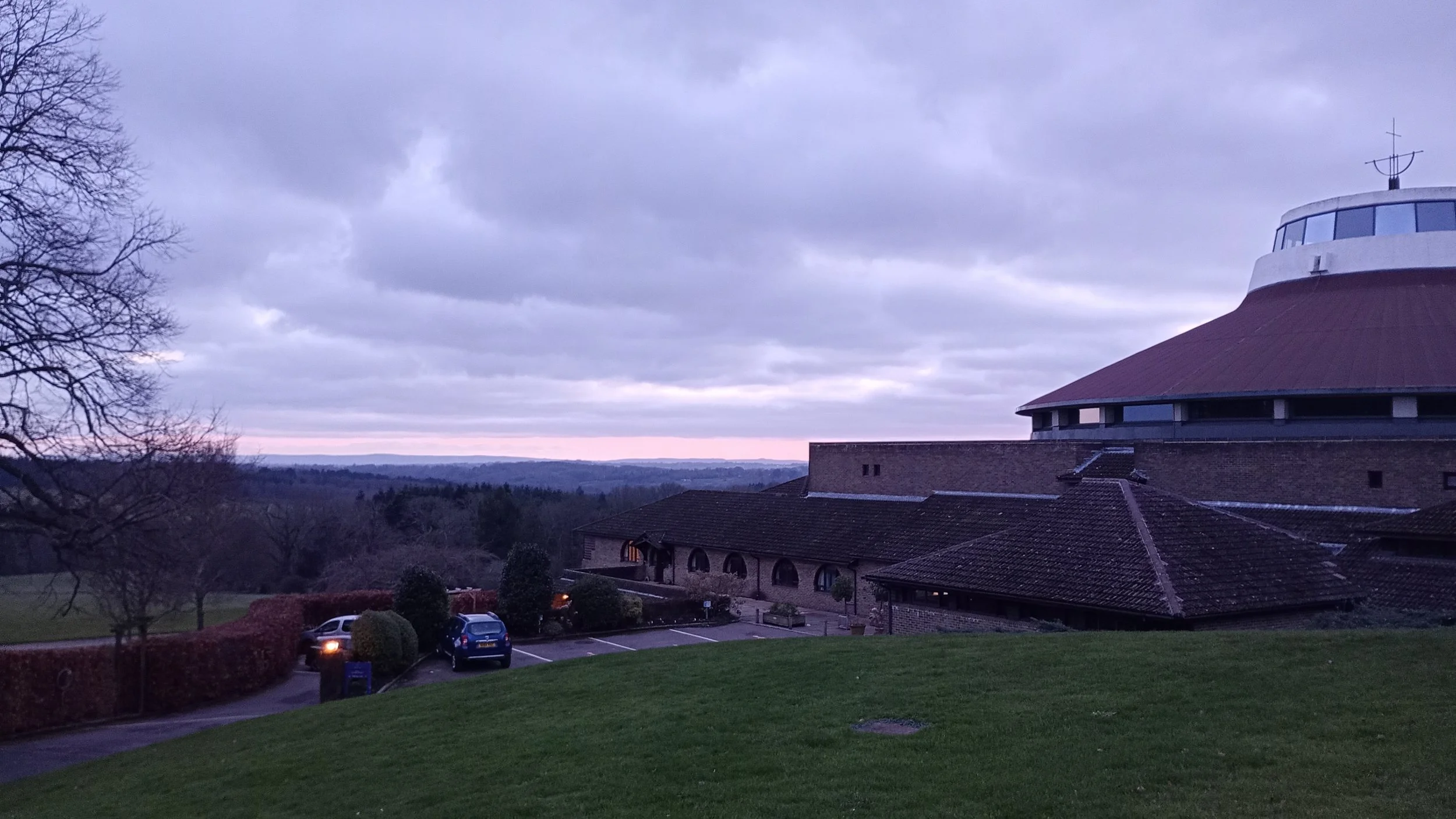
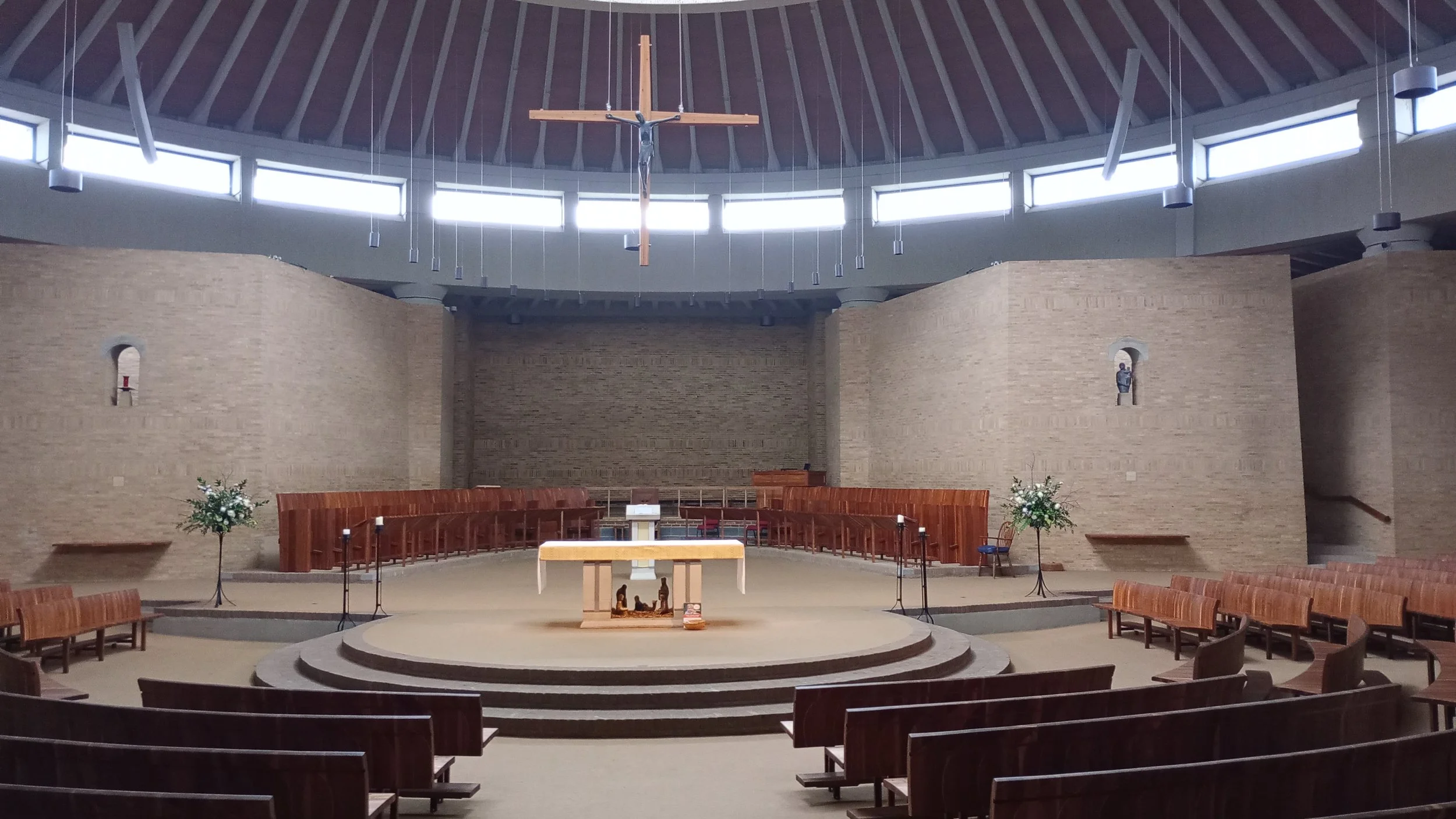
Like many of the monastic houses I’ve visited over the years, Worth is in a beautiful location. It sits on the crest of a hill from which one can look down over a panoramic view of the Sussex High Weald and, on a clear day, all the way to the South Downs. It wasn’t a clear day when I arrived. It was in the midst of the Arctic snap that had gripped Britain at the start of January and it was cloudy, and raining to boot. No matter; it was a good excuse to hunker down in my monastic cell and catch up on some reading. And even if in the surrounding woods it was either very icy or very muddy according to the temperature, I managed to get out for some bracing walks. I also enjoyed being in the vast, wonderful, circular shaped Abbey church and being immersed in the lovely plainchant singing of the monks. And then there were the meals. The Benedictines like good food, as do I, and particular treats for me on this visit were breakfast coffee in bowls, French style, and ‘real’ honey from the comb to put on the tasty, wholemeal bread. Also, eating in silence, with a monk reading aloud from a book, always gives the opportunity to really savour the taste and sight and smell of the food.
I don’t usually go to monasteries to socialise. On the contrary, I relish the opportunity to sink into the silence and the ancient, ordering, healing monastic rhythms. However, there was something that drew me to a guest that arrived the day after me, and it wasn’t just his Northern Irish accent, my favourite accent in the world. We got chatting one day in the guest sitting room and it turned out that Owen is the author of some best-selling self-help books. His first was entitled ‘Ten to Zen’ so he clearly had an eye for a catchy title, as well as an understanding of what literary agents and publishers are looking for. He was drawn to the title of my recently-finished book, ‘The Married Monk’ but suggested that it needed a subtitle. I went off and slept on it, having scribbled down a few ideas after compline, the final service of the day.
There are some things I’ve especially appreciated from my more than thirty years of being a ‘married monk.’ Indeed, when I was the father of three young children, besides being in a people-intensive day job, my regular monastery day was something of a life-saver for me. For twenty-four blessed hours I would live as a monk. Then I would return to ‘the world’ a new man, very well rested and very well fed. As well as the great food, I’ve always enjoyed the walks in what are usually beautiful, peaceful surroundings, or simply sitting with a cup of tea: be it out in a garden or orchard in the summer or in my monastic cell if it’s the winter. And sometimes I’ve recalled to myself the words often said by the Irish Jesuit, William Johnston on his zen retreats: “Sitting, only sitting, and the grass grows by itself.”
There’s usually one cup of tea that is especially sacred and that’s the first cup of the day. And there’s something about the first cup of tea of the day in a monastery that’s extra special. The opening prayer of the day at Worth is the 6.15 A.M. matins service and then there’s about forty minutes until the next service, lauds at 7.30. It was during that creatively charged time between matins and lauds that, sitting in my room with that first cup of steaming tea in my hand (and with it still dark outside and the temperature at around zero) there came to me the subtitle of my book. When I bumped into Owen on the way to breakfast, which follows straight after lauds, I tried it out on him and he seemed to like it, although I subsequently went through several alternatives before alighting on my final choice.
Like most monasteries, Worth is dwindling in numbers. But I’m so grateful that there are still groups of men and women who faithfully get up early in the morning when much of the world is still asleep and who live a hidden life of prayer and praise to God. I’m also incredible grateful to them for their warm welcome of someone like me, whose primary commitment is elsewhere. How I have been fed in body and spirit. And how this ancient way of life has helped me not just to survive but hopefully thrive in this increasingly noisy, non-stop and complex world.
For ‘Finding stillness and renewal in a busy world,’ (and as they sing at the end of the monastic liturgy): ‘Thanks be to God.’