The Canterbury Trails
There’s a lovely new English word ‘sonder’ which was coined in recent years by the writer John Koenig. It is defined as: “The profound realisation that every random passerby has a life as vivid, complex, and full of stories as your own.” It suggests both a profound sense of connection and a “humbling awareness that you are not the only ‘main character’ in the world.” It reminds me that everyone I meet carries their own dreams and secrets and struggles.
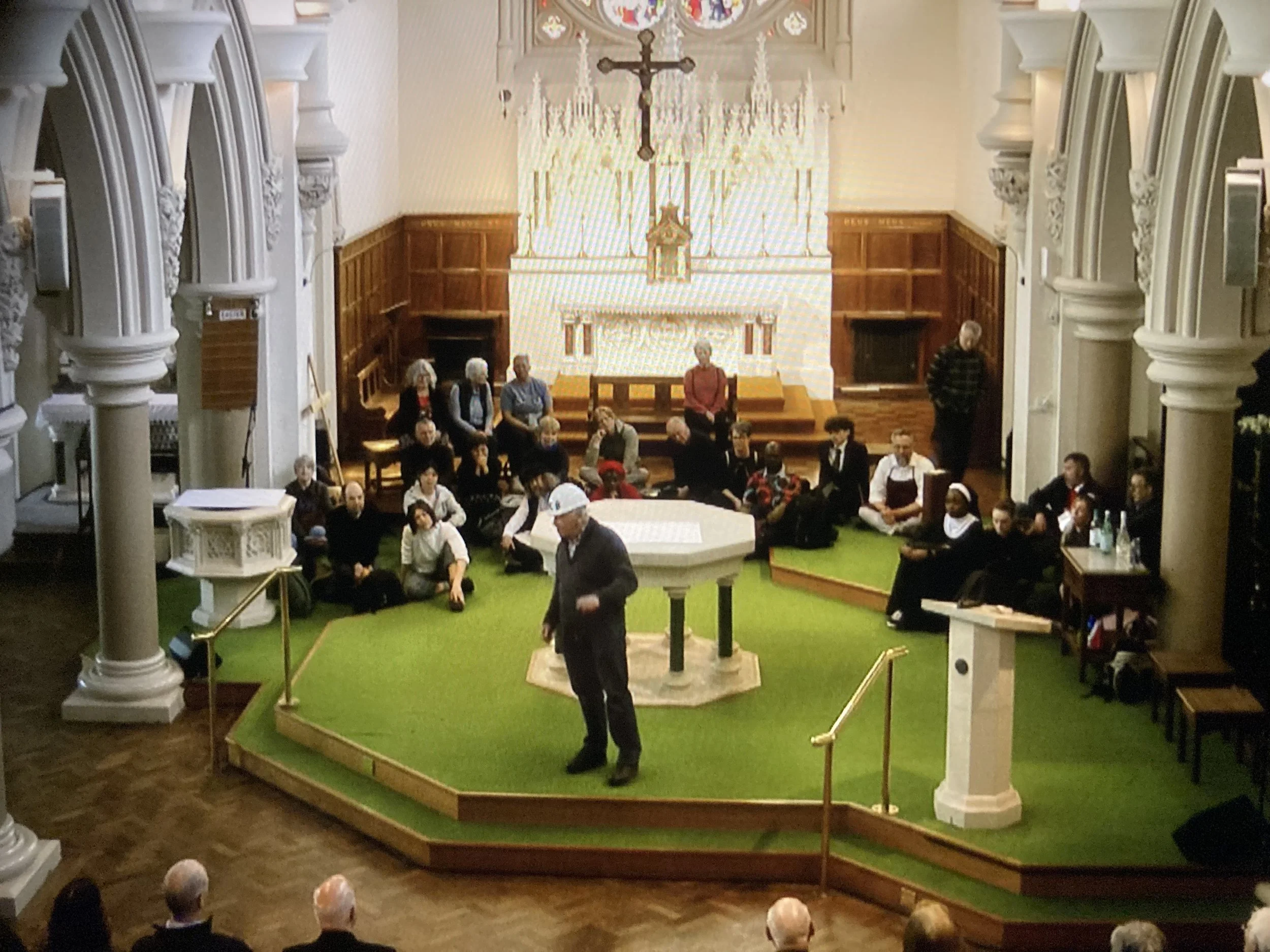
I came across the word, by happy coincidence, when I was between performances in a play; and one about pilgrimage, to boot. To commemorate the 150th anniversary of my church, St Thomas’ in Canterbury, our parish priest, Fr Anthony had asked one of our parishioners, Sir David Bintley (world renowned choreographer and former artistic director with the Birmingham Royal Ballet) to write something, and the incredible result was ‘The Canterbury Trails.’ It’s a modern day take on Chaucer’s classic in that it brings together a motley bunch of characters who do what people have always done on pilgrimage: they tell their stories. And these particular stories take well-known episodes from the gospels and present them in a new light.
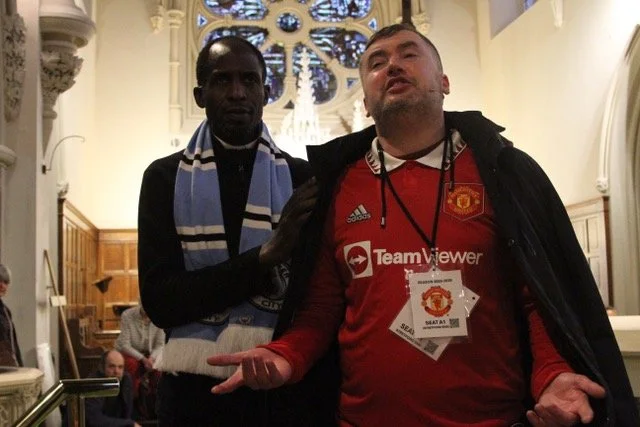
The first pilgrim to tell his tale is Joe, a carpenter whose main passion in life is football and his beloved Man Utd. He recounts how he gets beaten up and left for dead in the gutter following a Manchester derby and how firstly, a doctor, then a priest pass him by. In the end it is a City fan who rescues him and he reflects how hope can come “in unexpected guise.”
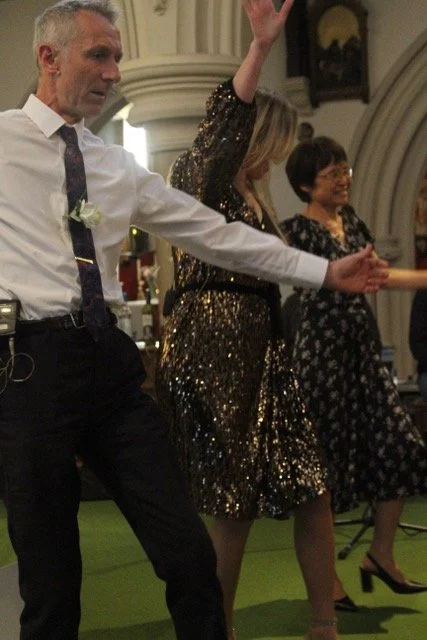
I was excited to be cast in the role of Bob the Builder; that is to say, a builder called Bob, as opposed to the children’s character! He’s a bit of a ‘wide boy’ wheeler and dealer from Essex and I went to town on that. One of many special touches was that Yim Soon, my wife in ‘real life,’ is Bob’s wife. The tale being told is the wedding of their daughter, Dorabella, who is, as Bob announces proudly with a little swing of his hips, “The only offspring of my loins…and that of my wife Shirl!” The reception is organised by wannabe wedding planner Kylie, brilliantly portrayed by a woman called Claire. A couple of scenes have Yim Soon, Claire and I doing a dance routine, together with teenagers from a dance school in Canterbury (where our ‘real life’ daughter used to go). The phrase ‘dad dancing’ was used on more than one occasion in rehearsal! But then after the first actual performance, a young man called Adam said to me, “Yes, it was dad dancing but it was good dad dancing!” He assured me that was a compliment and I said I would certainly take it as that. In any case, it had been such enormous fun and several people commented on how joyful and jolly the scene was.
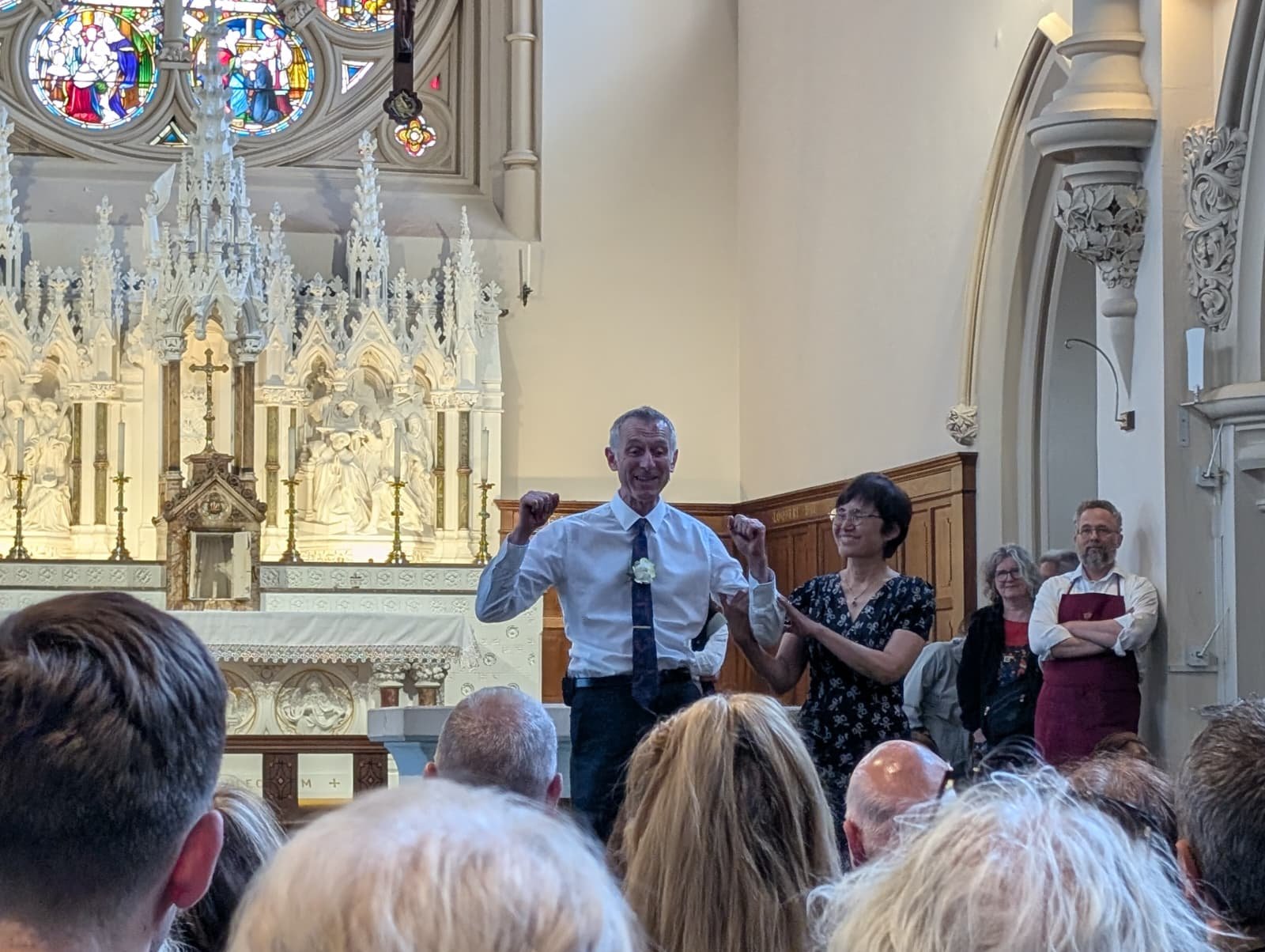
But on with the story…and as Kylie announces during the reception, “We’ve got a problem Bob; I’ve cocked up on the job!” It turns out that Majestic has sent not Pinot Grigio, as ordered, but San Pellegrino; fifty litres of it! What happens? Yes, you’ve guessed it: a mystery man appears and declares, as quoted in Bob’s Eastender twang, “As my present to your daughter; I’ll transform this fizzy water; and they’ll think you’ve saved the best wine until last.” The water is duly transformed into the “best champagne,” and another dance number ensues.
Some of the cast members came with extensive experience of amateur dramatics. For others of us, it was pretty much our first time to be ‘treading the boards.’ That didn’t really matter too much. There was a positive energy that pervaded the whole enterprise and a deep sense of connection, as well as lots of mutual support and encouragement. David was an exacting but very kind director who brought out the best in us. He had produced a script that, besides being contemporary and clever, was powerful and poignant; and it was perfectly accompanied by the excellent score of his composer friend Colin Towns.
The ‘Host’ had declared in the beginning that the best story would earn its teller a meal. Finally, as we arrive in Canterbury, he announces that “no one was the best,” rather that each had contributed to “one story still being written.” Just as no single story had been dominant, neither had one character been more important than another. We’d all played our part: whether ‘main characters’ or not; whether performers or those doing essential jobs behind the scenes. The audience are a vital part of it as well. They too come with their unique joys and struggles, and their engagement with the creative enterprise in front of them is a kind of completion of it. I was told that some people were in tears. I was as well as we came to the final scene of the final performance.
The Canterbury Trails did what pilgrimage has been doing for centuries. It brought people together: each of us with our totally unique and sacred stories; each of us as part of a complex but common humanity, where we can be both the ‘main character’ and a compassionate bystander in the drama of another’s life. It was all very much in keeping with that word sonder. And in common with my long experience of pilgrimage, it was utterly joyous.
I didn’t want it to end. But end it must, as we sang at the end of the show one last chorus:
‘We’re pilgrims all
We’re pilgrims all
On the road which takes us home
From this world with all its cares and woes
To the one which is to come.’